
Why Is My Boiler Leaking Water?
Discovering water leaking from your boiler can be worrying. Whether it’s a small drip underneath the unit or a steady flow of water, a leaking boiler should never be ignored. Even a minor leak can reduce your heating system’s efficiency, increase energy bills, damage your property, and lead to costly repairs if left untreated.
A boiler leaking water isn’t always a sign that you need a complete replacement. In many cases, the issue can be repaired quickly by a qualified Gas Safe engineer. The key is identifying the cause early before the problem becomes more serious.
In this guide, we’ll explain the most common reasons your boiler may be leaking, what you should do if you notice water, the average repair and new boiler Installation cost, and when it’s time to contact the experts at GK Heating.
Common Causes of a Boiler Leaking Water
Boilers are made up of numerous components that work together to provide heating and hot water. Over time, wear and tear, pressure issues, or ageing parts can cause leaks to develop. Understanding the source of the problem is the first step towards an effective repair.
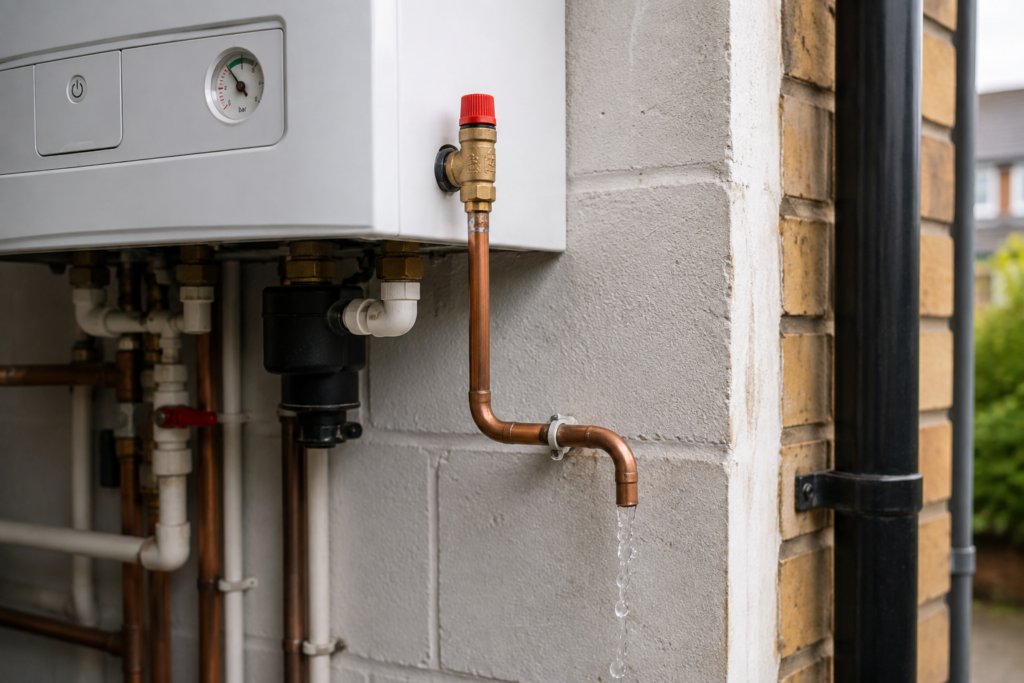
Boiler Leaking from the Pressure Relief Valve
One of the most common causes of a boiler leaking from the pressure relief valve is excessive pressure inside the system. The pressure relief valve is an important safety feature designed to release water when the internal pressure rises above safe levels.
If you notice water dripping from a copper discharge pipe outside your home or near the boiler, the pressure relief valve may be releasing excess pressure. This can happen because of an overfilled heating system, a faulty filling loop, or a failed expansion vessel.
While topping up boiler pressure is something many homeowners can do themselves, persistent pressure problems should always be investigated by a qualified engineer. Simply resetting the pressure without fixing the underlying cause is only a temporary solution.
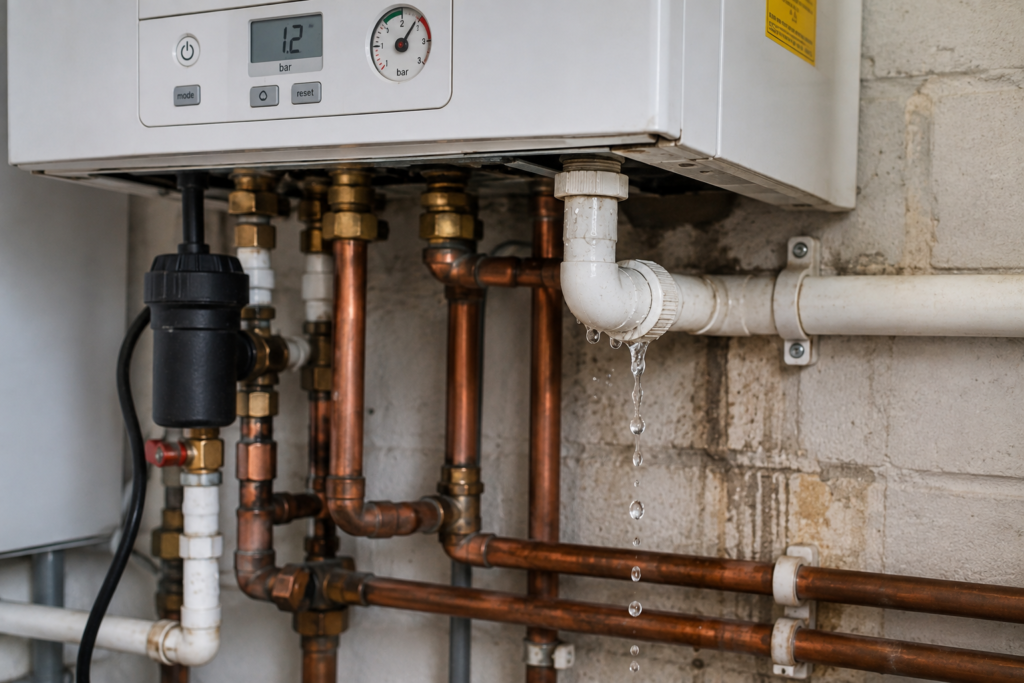
Boiler Dripping Water from a Pipe
Many homeowners search online for boiler dripping water from pipe, believing the boiler itself has failed. In reality, the leak could be coming from one of several connected pipes rather than the appliance itself.
The water may be escaping from the condensate pipe, overflow pipe, heating flow or return pipes, or safety discharge pipe. In some cases, a pipe connection has simply become loose over time due to the expansion and contraction of the heating system.
Although tightening a connection might sound straightforward, it is always advisable to have pipework inspected by a professional to ensure the leak isn’t being caused by internal damage or corrosion.
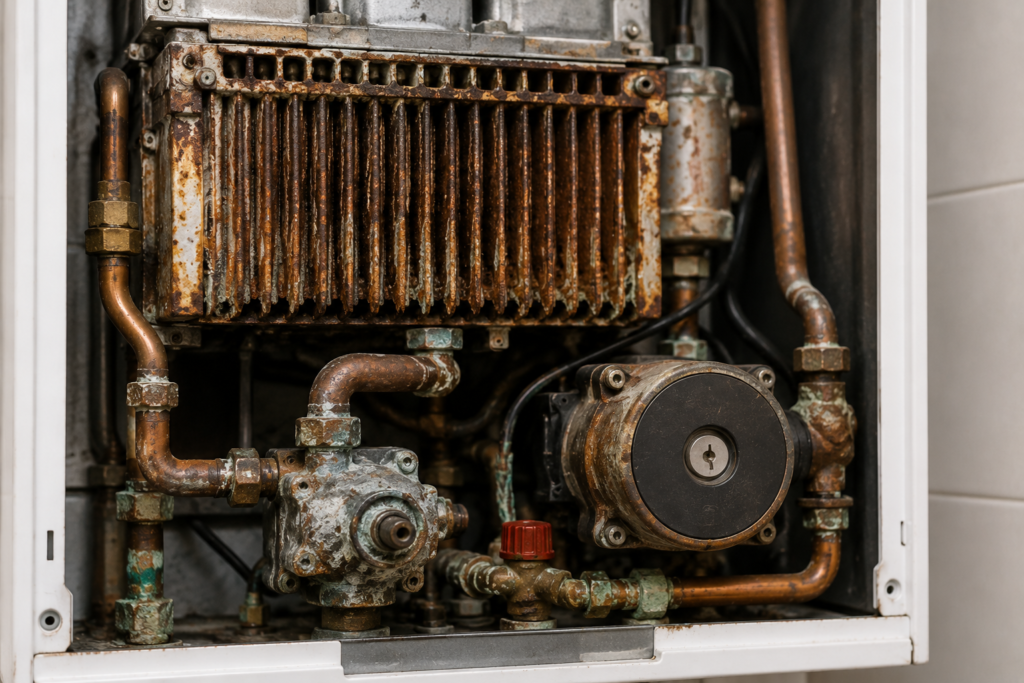
Corroded Components
Like any mechanical appliance, boilers naturally deteriorate with age. Continuous exposure to heat and water can eventually cause internal components to corrode. The heat exchanger, valves, seals, and pipework are particularly vulnerable in older boilers. As corrosion develops, tiny holes or weakened joints may begin to leak.
If corrosion is limited to one component, a repair may be sufficient. However, if several parts have deteriorated, replacing the boiler may offer better long-term value and improved efficiency.
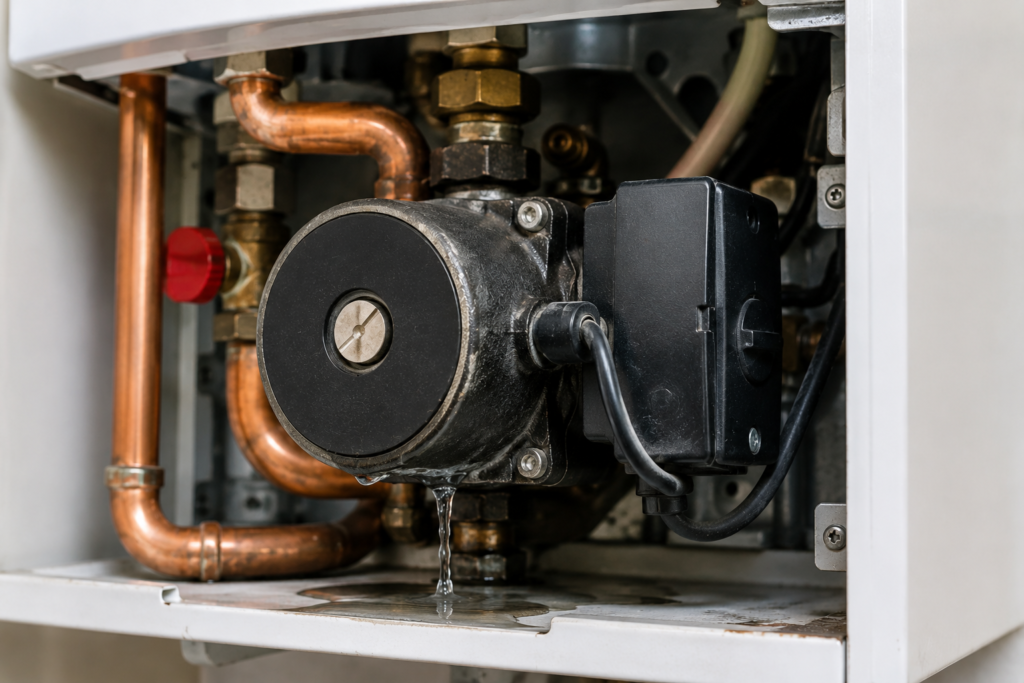
Faulty Pump Seal
The circulation pump is responsible for moving hot water around your central heating system. Over time, the seals surrounding the pump can wear out, allowing water to escape underneath the boiler.
You may notice a small pool of water beneath the appliance or hear unusual noises coming from the pump. Heating performance may also decline as the pump becomes less effective. Fortunately, replacing worn pump seals is usually a relatively straightforward repair when carried out by a Gas Safe engineer.
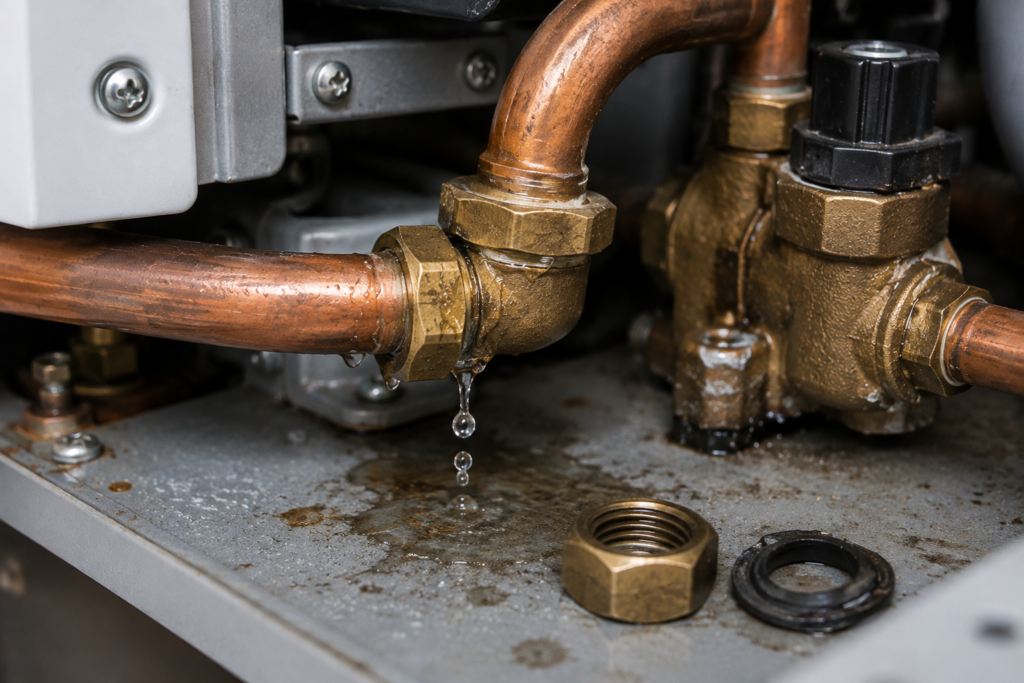
Loose Connections and Worn Seals
Your heating system expands as it warms up and contracts as it cools down. This repeated movement can gradually loosen fittings and joints over many years of use. Even a tiny gap around a connection can allow water to drip slowly.
While the leak may seem insignificant at first, continuous dripping can eventually damage nearby components or flooring. Similarly, rubber seals and washers naturally wear out over time. Replacing these parts early can prevent larger repairs later.
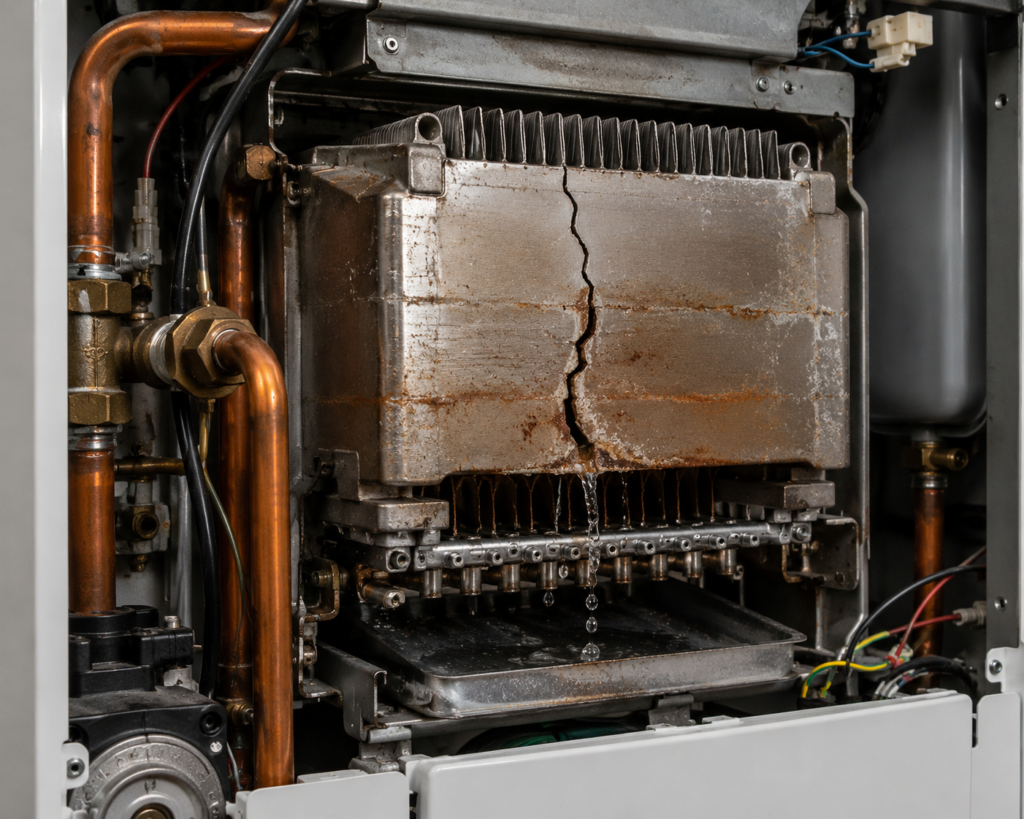
Cracked Heat Exchanger
The heat exchanger is one of the most important parts of any boiler, transferring heat from the burner into the water that circulates your home. Unfortunately, it is also one of the most expensive components to replace.
A cracked heat exchanger can lead to persistent leaks, pressure loss, poor heating performance, and unusual metallic sounds from inside the boiler. Depending on the boiler’s age and condition, replacing the entire appliance may be more economical than fitting a new heat exchanger.
What Should You Do If Your Boiler Is Leaking?
If you notice water around your boiler, follow these simple steps:
1. Turn Off the Boiler: Switch off your heating system to prevent further damage.
2. Shut Off the Water Supply (If Safe): If water is leaking heavily, isolate the boiler if you know how to do so safely.
3. Check the Pressure Gauge: Normal boiler pressure is usually between 1 and 1.5 bar when the system is cold.
If the pressure is much higher, this could explain why the pressure relief valve is releasing water.
4. Dry the Area: Remove standing water to protect flooring, electrical components, and nearby furniture.
5. Call a Gas Safe Engineer: Never attempt to dismantle or repair a boiler yourself.
A qualified engineer can safely diagnose and repair the problem while ensuring your heating system remains safe to use.
Average Boiler Repair Cost in the UK (2026)
One of the first questions homeowners ask after discovering a leak is, “How much will it cost to repair my boiler?” The answer depends on the cause of the leak, the boiler’s age, and whether replacement parts are required.
Below are typical repair costs in the UK:
| Repair | Average Cost |
|---|---|
| Minor leak repair | £80–£150 |
| Boiler pressure adjustment | £80–£120 |
| Pressure relief valve replacement | £120–£220 |
| Pump replacement | £180–£350 |
| Expansion vessel replacement | £180–£350 |
| Heat exchanger replacement | £400–£900 |
| New boiler installation | £1,800–£3,500+ |
Although some repairs are inexpensive, repeatedly fixing an older boiler may not be the most cost-effective option. If your boiler is more than 10–15 years old and requires frequent repairs, investing in a modern, energy-efficient replacement could save money in the long run through lower energy bills and fewer breakdowns.
At GK Heating, we understand that boiler problems rarely happen at a convenient time. Whether your boiler is leaking, losing pressure, or has stopped working altogether, our experienced Gas Safe registered engineers are ready to help.
How to Prevent a Boiler Leak?
Regular maintenance is the best way to avoid unexpected breakdowns and costly repairs. Here are some practical ways to keep your boiler in good condition:
2-Monitor Boiler Pressure
3-Watch for Early Warning Signs
- Small water drips
- Rust around the boiler
- Unusual noises
- Reduced heating performance
- Frequent pressure loss
4-Bleed Your Radiators
5-Choose Professional Repairs
Only use a Gas Safe registered engineer for boiler repairs and servicing. Professional maintenance ensures your boiler remains safe, efficient, and compliant with UK regulations.
Why Choose GK Heating?
When your boiler starts leaking, you need a heating engineer you can trust. At GK Heating, our Gas Safe registered engineers deliver fast, reliable boiler repairs with honest pricing and quality workmanship. Here's why customers choose GK Heating:
- Gas Safe registered engineers
- Fast boiler diagnostics and repairs
- Transparent pricing with no hidden costs
- Emergency boiler repair services
- Regular boiler servicing
- Boiler servicing and maintenance
- Energy-efficient boiler installations
- Friendly, professional customer service
Contact our friendly team today for expert boiler repairs, servicing, or a new energy-efficient boiler installation.
Frequently Asked Questions
A boiler leaking underneath is commonly caused by loose pipe connections, worn seals, pump failure, corrosion, or a damaged heat exchanger. A professional inspection is recommended to identify the exact cause.
A small leak may not be an emergency, but it should never be ignored. Turn off the boiler if the leak becomes significant or if you notice unusual noises, burning smells, or rapid pressure changes.
This usually happens because the boiler pressure is too high or the expansion vessel is faulty. A Gas Safe engineer can safely diagnose and repair the issue.
It's not advisable. Continuing to use a leaking boiler can worsen the damage, reduce efficiency, and potentially create safety risks.
Most common boiler repairs can be completed within one to three hours, depending on the fault and the availability of replacement parts.
Some home insurance policies include boiler cover, but many require additional protection. Check your policy to see what is included.
Turn off your boiler and, if it's safe, isolate the water supply. Place a towel or container under the leak and contact a Gas Safe engineer. Avoid attempting DIY repairs.
A leaking boiler isn't always dangerous, but it can cause water damage, reduce efficiency, and indicate a more serious fault. If you notice unusual noises or burning smells, switch it off and call an engineer.
A leak from the pressure relief valve is usually caused by high boiler pressure, a faulty expansion vessel, or a defective filling loop. A Gas Safe engineer should inspect and repair the fault.